To prepare for office furniture pickup, list every item, decide what stays, and remove personal property and private files. Then confirm access, timing, and the full removal plan with the pickup team. Good planning helps Kennesaw Junk Removal move furniture with fewer delays and less disruption.
Table of Contents
- What should you do before scheduling office furniture pickup?
- How can you decide which office furniture to remove?
- How should you prepare office furniture for removal?
- How can you protect employees and the workplace during pickup?
- What should businesses know about disassembling office furniture?
- How does office furniture pickup usually work?
- What final checks should you complete after office furniture removal?
- Key takeaways
- Frequently Asked Questions
- Conclusion
What should you do before scheduling office furniture pickup?
Before you schedule a pickup, make a furniture list and confirm the project size. Choose a time that works for your staff and building. A clear plan helps the removal team know what must go and how to reach it. It also helps prevent last-minute changes.
Create a complete inventory of unwanted furniture
Walk through every room and record each item that needs removal. Include desks, cubicles, chairs, filing cabinets, shelves, conference tables, reception pieces, and breakroom furniture. Note items that are large, attached, damaged, or stored somewhere else.
A simple list can show the item, room, number, and condition. Photos can help when many pieces look alike. Mark items that must stay so workers do not take the wrong property. For a large office, a room-by-room list is easier to check than one long list.
Look in places that are easy to miss. Storage rooms, supply closets, basements, and loading areas may hold old furniture. A full walk-through can prevent extra pieces from being found after the appointment is set.
Confirm the pickup scope and timing
Decide if the job covers one room, one floor, or the whole office. Also say if the team will remove furniture only or handle a wider office cleanout. These details help the provider plan workers, loading space, and tools.
Pick a time that fits the workday. Some businesses choose early morning, late afternoon, or a time with fewer visitors. Building rules may limit elevator use, parking, loading docks, or noisy work. Kennesaw Junk Removal can help Kennesaw businesses review the plan before pickup.
How can you decide which office furniture to remove?
Sort office furniture into three groups: keep, reuse, and remove. This makes choices easier and helps protect useful pieces from accidental removal. It also gives the pickup team a clear work list.
Separate reusable, recyclable, and unwanted items
Reusable furniture may include clean desks, strong chairs, shelves, or tables that fit another room. A business may move these pieces, store them, or offer them to a nonprofit. Reuse is often a good choice when an item is safe and in good shape.
Recyclable pieces may contain metal, cardboard, wood, or some plastics. Local rules differ by material and facility. A removal team can explain which items may be sorted for recycling and which need another option. Keep damaged furniture with sharp edges, broken frames, or heavy mold away from reuse items.
Unwanted furniture no longer helps the business and has no clear next use. Mark these pieces with removable labels. Use simple words such as “remove” and “keep” so every worker can follow the plan.
Account for desks, cubicles, chairs, and bulky pieces
Office furniture often has many connected parts. A workstation may include a top, legs, drawers, panels, shelves, and cable trays. A cubicle may have walls, posts, work surfaces, and overhead storage. Listing each part helps prevent missing pieces.
Large conference tables and reception desks need extra care. Measure narrow doors, halls, and turns when an item is very large. A bulky piece may need to move in sections, travel on a dolly, or leave through another exit.
Chairs and small items are easy to miss under desks or in storage rooms. Add them to the list. This step is useful during an office move, renovation, or downsizing project.
How should you prepare office furniture for removal?
Before pickup, employees should empty furniture and remove items that do not belong with it. Check drawers, shelves, cabinets, and desk compartments one at a time. This keeps personal property, records, and small equipment from leaving by mistake.
Empty drawers, shelves, and storage compartments
Open every drawer and cabinet, including locked or rarely used sections. Check behind shelves and under removable trays. Small items such as keys, pens, chargers, tools, and business cards are easy to overlook.
Put anything that must stay in a labeled box or another office. Do not leave loose items inside furniture unless the work plan includes them. Empty pieces are also safer to lift because contents cannot shift during the move.
If a filing cabinet is heavy, employees should not carry it alone. Remove the contents first and let trained workers handle the cabinet. Keep cabinet keys with the office manager unless the cabinet is part of the pickup.
Remove personal items, electronics, and sensitive documents
Employees should take personal belongings home or store them before pickup day. This includes photos, plants, small appliances, notebooks, and decorations. The same applies to monitors, phones, printers, and docking stations unless those items are included in the work order.
Sensitive documents need special care. Remove client records, payroll information, passwords, paper files, and other private material before furniture leaves. Follow the company’s document destruction policy instead of putting private records in ordinary bins.
A final desk sweep can prevent mistakes. Each employee can check the top, drawers, underside, and nearby floor. This small step protects privacy and prevents a search through a loaded truck later.
How can you protect employees and the workplace during pickup?
The workplace needs clear paths, safe access points, and a plan for people who stay on site. Good preparation lowers trip risks and keeps removal work apart from normal business activity. It also helps protect walls, doors, floors, and finished surfaces.
Clear pathways and identify access points
Remove boxes, cords, bins, plants, and loose items from halls. Identify the best entrance, elevator, loading zone, and truck position. Tell the pickup team about stairs, narrow turns, security doors, and areas they cannot use.
Protect floors and walls when the building requires it. Building managers may have rules for elevator pads, carts, loading docks, or moving times. Confirm those rules before the appointment, not when workers arrive.
A clear path should run from each furniture group to the exit. If the route crosses a busy work area, mark it and keep people away during loading. Never block fire exits, sprinkler controls, electrical panels, or required access routes.
Plan around employees, customers, and daily operations
Tell employees when removal will happen and which areas to avoid. Customer-facing businesses may choose a quiet time so visitors do not pass through the work zone. Offices with calls or meetings may need a temporary alternate space.
Assign one person to answer questions and approve changes. This contact can confirm which pieces are included and help the team reach locked rooms. Other employees should not move furniture while the removal crew is working.
Use signs or cones to show closed areas. Keep pets, visitors, and children away from loading work. These steps help Kennesaw Junk Removal work smoothly for offices across the main Kennesaw area, including Downtown Kennesaw, Legacy Park, Marietta, Austell, Hiram, Dallas, and nearby communities.
What should businesses know about disassembling office furniture?
Disassemble furniture only when it can be done safely and when it makes removal easier. Small desks may move whole, while large workstations, cubicles, and conference tables may need to come apart. The best choice depends on size, weight, design, and the route out.
When to disassemble desks, cubicles, and conference tables
A desk may need disassembly if it cannot fit through a doorway or turn in a hall. A large conference table may need its legs or sections removed. Cubicles often require panels, posts, shelves, and work surfaces to be separated.
Do not force a piece through a tight space. This can damage the furniture, building, or people nearby. If an item is attached to a wall or floor, confirm who must remove the attachment before pickup.
Follow the furniture maker’s design when possible. Do not cut panels, bend metal, or break pieces apart just to save time. Safe removal matters more than making an item smaller.
What to do with hardware, panels, and components
Keep screws, brackets, keys, and small hardware in a labeled bag when furniture may be reused. Place the bag with the matching desk or cabinet. If the furniture is being discarded, gather loose parts so they do not become a trip hazard.
Keep panels and components with the right furniture group until the team checks them. Some parts may be reused, while others may be sorted as bulky material. Tell the team about missing pieces, damage, or items that must stay in place.
When you are unsure, ask the removal provider if the team handles disassembly. Kennesaw Junk Removal can help property owners and professionals decide what to prepare before workers arrive.
How does office furniture pickup usually work?
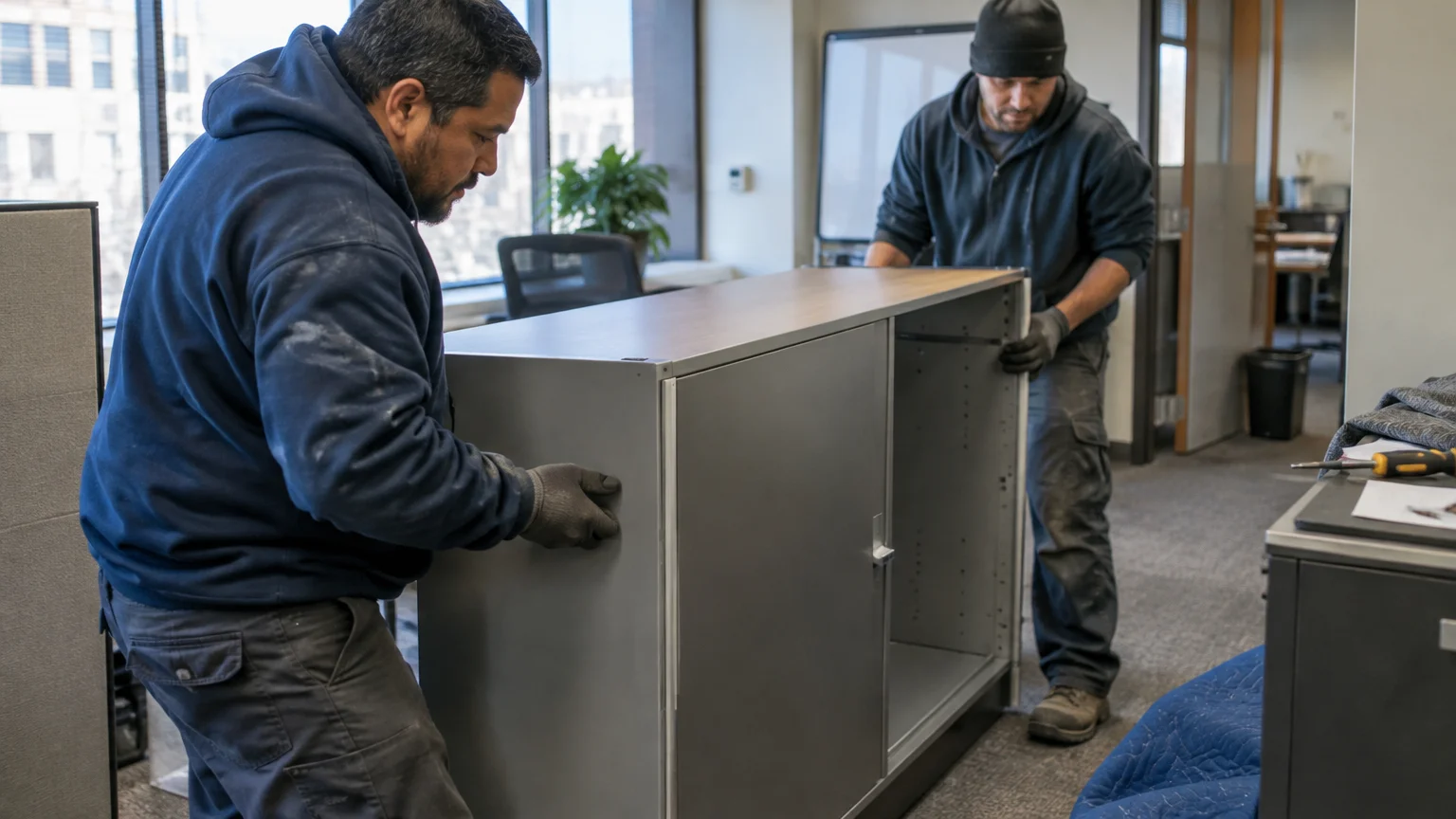
Office furniture pickup usually starts with a walk-through. It then moves to removal, loading, and sorting. The team checks the agreed items, protects the route, and carries furniture to the vehicle. The process can change based on the building, furniture, and access.
What happens when the removal team arrives
A chosen office contact should meet the team and review the inventory. The contact can point out items to remove, items to keep, and rooms with special access rules. This short review helps prevent confusion before lifting starts.
The team may inspect doors, elevators, stairs, and the loading area. Furniture is moved in a careful order, often starting near the exit or with pieces needing more room. Employees should stay clear of the route while work continues.
If the list does not match the furniture, the office contact can decide what happens next. Clear approval helps prevent the removal of property that should stay.
How loading, sorting, and disposal are handled
Furniture is loaded so heavy pieces stay stable and lighter items remain protected. Components may be grouped by material or kept together when they can be reused. The provider may sort suitable pieces for donation, recycling, reuse, or another approved option.
Not every facility accepts every item. Mattresses, appliances, electronics, and furniture with special materials may need different handling. If an office cleanout includes these items, mention them before pickup.
The goal is a clear workspace and a responsible next step for unwanted items. A local team serving the Kennesaw area can explain handling options without asking office staff to do the heavy lifting.
What final checks should you complete after office furniture removal?
After removal, inspect each room, route, and storage area. The final check confirms that requested furniture is gone and that no personal items or loose hardware remain. It also helps the business plan the cleared space.
Inspect the workspace and confirm all requested items are gone
Compare the empty rooms with the original inventory. Check behind doors, under counters, inside storage areas, and near loading points. Look for missed items, furniture meant to stay, or parts placed in the wrong area.
Walk the removal path too. Check floors, walls, doors, corners, and elevator areas for visible issues. Confirm that exits, electrical panels, vents, and other access points remain clear.
If something needs attention, raise it before the team leaves when possible. A short written note can help the business record what was removed and what remains.
Plan the next use of the cleared office area
Once the space is empty, decide how it will serve the next business need. It may become a work area, meeting room, storage zone, training room, or open space for a renovation. Early planning helps keep the area from filling with random boxes and unused items.
Clean floors and surfaces as needed. Review the new layout with employees so desks, walkways, and shared areas stay easy to use. If more pieces must leave later, make a new list instead of mixing them with furniture already removed.
A well-planned finish turns furniture removal into a useful workplace change. It can help the business move forward without leaving old equipment in corners or storage rooms.
Key takeaways
- Make an inventory of desks, cubicles, chairs, tables, cabinets, and other office furniture.
- Separate keep, reuse, recycle, and remove items before the pickup date.
- Empty furniture fully and remove personal items, electronics, and private records.
- Clear paths and plan timing around employees, customers, building rules, and daily work.
- Complete a final walk-through before the removal team leaves.
Frequently Asked Questions
Should employees empty desks before office furniture pickup?
Yes. Employees should remove personal items, electronics, papers, and anything they need to keep. Drawers, shelves, and cabinets should also be checked. An empty piece is easier and safer to move. Private records should follow the company’s document policy instead of staying inside furniture.
Can a removal team take apart office cubicles?
Many removal teams can handle cubicle parts, but ask before scheduling. Cubicles may include panels, posts, shelves, desks, and hardware. The team can then plan for the space and tools needed. Wall or floor attachments may need separate approval or building support.
How far ahead should an office plan furniture pickup?
The right lead time depends on project size, building access, and the schedule. A small pickup may need less planning than a full office cleanout. Start once you know which items are leaving. Early planning allows time for sorting, record removal, access rules, and employee notice.
What happens to unwanted office furniture after pickup?
Handling depends on the item’s condition, material, and local facility rules. Some furniture may be reused, donated, recycled, or sent for disposal. Share details about damaged items, electronics, appliances, or unusual materials before pickup. This helps the team plan the next step.
Can office furniture pickup happen while employees are working?
It may be possible, but the work area and moving path must stay clear. Many businesses choose a quieter period to reduce noise and interruptions. Tell employees which areas are closed and assign one person to guide the team. Building rules may also limit pickup times.
Conclusion
The easiest way to prepare for office furniture pickup is to plan before removal day. A complete inventory, clear sorting choices, empty furniture, safe paths, and one office contact can prevent many delays. These steps work for a small office update or a larger office cleanout.
Kennesaw Junk Removal helps businesses organize furniture removal and nearby Georgia communities. Contact us to arrange the next step for an office furniture pickup that fits your workplace plan.