An appliance pickup service collects large home or business appliances, loads them safely, and takes them to the right next location. The work may include planning access, moving heavy items, and sorting appliances for reuse, recycling, or disposal. Kennesaw Junk Removal can help plan a safe pickup for your property.
Table of Contents
- What does an appliance pickup service include?
- How is appliance pickup scheduled and prepared?
- Does appliance pickup include disconnection and removal?
- How are refrigerators, washers, dryers, and stoves handled?
- Where do appliances go after pickup?
- How much does appliance pickup cost?
- What should you look for in an appliance pickup service?
- Frequently Asked Questions
What does an appliance pickup service include?
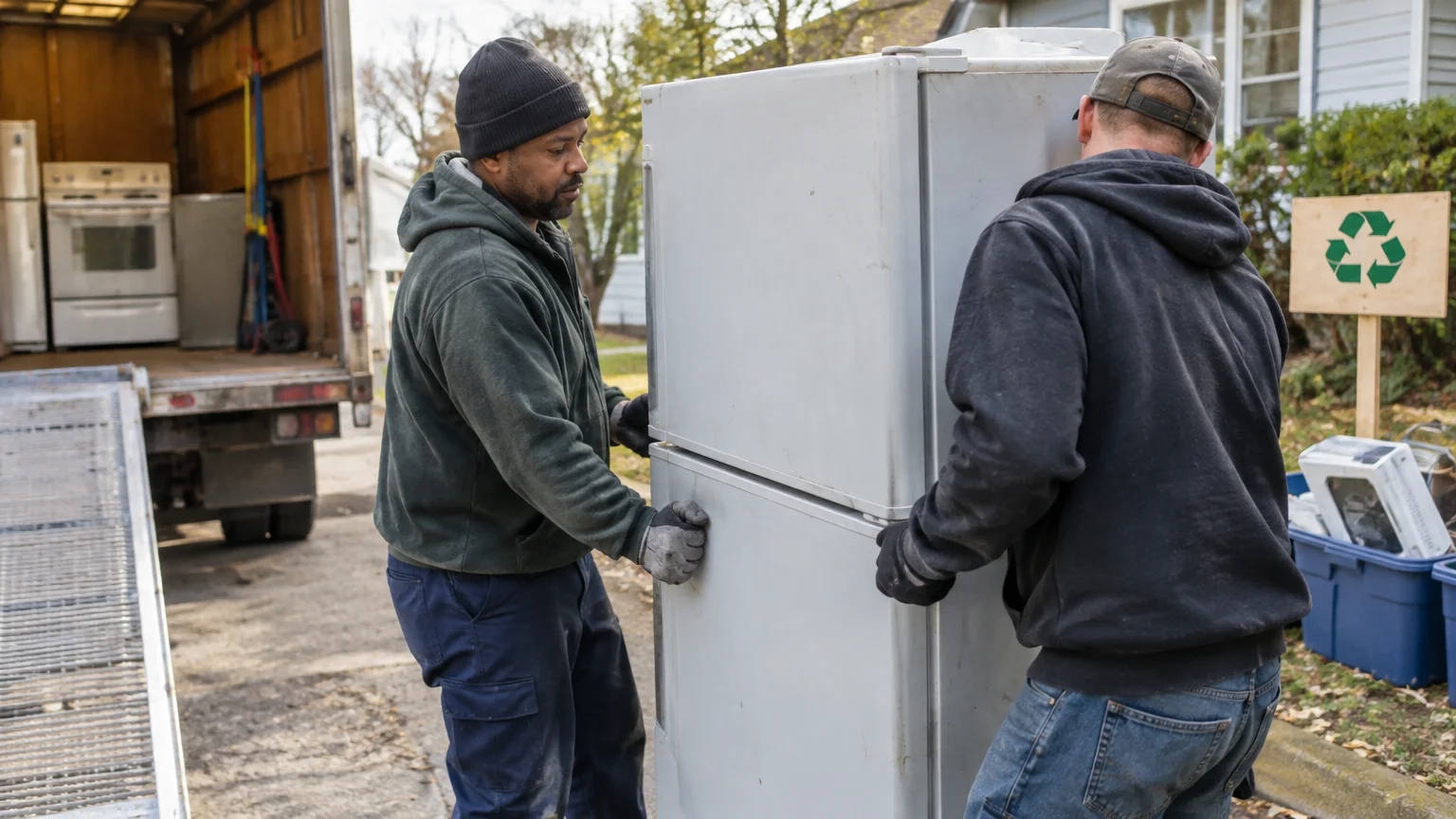
An appliance pickup service often includes planning, carrying, loading, and transport. Many services collect appliances from houses, apartments, rental homes, offices, and stores. The crew may move each item through doors, halls, stairs, garages, or outdoor paths.
The service is more than placing an old machine by the curb. A full-service junk removal company checks the item and the route first. The crew can protect nearby floors and walls while loading the appliance. The item can then go to a reuse, recycling, or disposal site.
Appliances commonly accepted for pickup
Most appliance removal services accept large household machines, such as:
- Refrigerators and freezers
- Washing machines and clothes dryers
- Electric or gas stoves and ovens
- Dishwashers and smaller appliances
- Water heaters, when local rules allow them
Acceptance rules can vary by provider and item type. Some appliances contain refrigerant, fuel, oil, batteries, or other materials that need special care. A clear description helps Kennesaw Junk Removal decide if the appliance fits the planned pickup.
How residential and commercial pickups differ
Residential pickups often involve one or two appliances. They may sit in a kitchen, laundry room, garage, basement, or shed. Commercial work may involve many units from an office, restaurant, rental property, store, or building project.
A business pickup may need a loading plan, building approval, elevator access, or a wider service window. Property owners should ask tenants or managers to clear the path before the crew arrives. In Kennesaw, the building layout and local disposal rules can affect the visit.
How is appliance pickup scheduled and prepared?
Scheduling starts with a clear description of the appliance and its location. The provider needs to know what will be removed and how the crew will reach it. Good details help prevent delays on pickup day.
You do not need to measure every wall. Still, useful details include the appliance type, size, floor level, stairs, narrow doors, gates, and parking limits. Photos may also help show tight turns, clutter, or hard-to-reach areas.
Information to provide when booking
The customer should share:
- The number and type of appliances
- Whether each item is inside, outside, or in another building
- Whether stairs, elevators, gates, or long walks are involved
- Whether the item connects to gas, water, power, or a drain
- Any damage, leaks, broken doors, or sharp edges
A property owner should mention tenant schedules and building rules. A business owner should explain loading areas, delivery rules, and site contacts. These details help a professional junk removal service choose the right crew and tools.
How to prepare the appliance and access route
Remove food, clothes, dishes, and loose items before pickup. Empty washers, dryers, dishwashers, and refrigerators. Secure doors and shelves when possible, but do not tape a damaged door in a way that creates danger.
Clear rugs, boxes, toys, and other trip hazards from the route. Keep pets and children away from the work area. You can safely sweep the path and open gates, but do not move a heavy appliance alone. Kennesaw Junk Removal can explain what preparation is needed before the visit.
Does appliance pickup include disconnection and removal?
Appliance pickup often includes carrying and loading, but disconnection rules can differ. A crew may remove simple water or power connections when the service allows it. Gas lines, hardwired equipment, refrigerant systems, and unsafe connections may need a licensed professional.
Homeowners should never remove a gas line or cut electrical wires without proper training. A small mistake can cause a gas leak, shock, fire, water damage, or injury. If a connection does not look clearly safe, stop and ask the right professional for help.
What removal crews may handle
A removal crew may move a disconnected appliance from its current spot. The crew may protect floors, use moving tools, guide the item through narrow areas, and load it for transport. The homeowner usually does not need to lift the appliance.
Simple preparation is often safe for a homeowner. This includes emptying the appliance, cleaning loose debris, removing personal items, and clearing the route. Technical work should be left to a qualified person.
When a licensed professional is needed
A licensed professional may be needed for gas appliances, hardwired equipment, refrigerant systems, or plumbing that is not a simple removable connection. Local rules may also require a special trade license for some work.
The pickup provider can tell the customer what must happen first. Once the appliance is safe and disconnected, the removal crew can often handle the physical collection. This clear division helps lower risk and keeps the job organized.
How are refrigerators, washers, dryers, and stoves handled?
Each appliance needs different care. Refrigerators and freezers may contain refrigerant. Washers can hold water, and dryers can contain lint. Stoves may be heavy, while gas models need extra care before movement.
A good appliance removal service checks the item before loading it. The crew looks for leaks, loose parts, broken glass, sharp edges, and unstable doors. This check helps show whether the appliance can be reused, recycled, or sent to an approved disposal site.
Special considerations for refrigerators and freezers
Refrigerators and freezers should be empty and clean before pickup. Remove food, ice, shelves, and loose bins. Keep doors closed during movement unless a safe preparation step requires another method.
A refrigerator may need special handling because of refrigerant and other parts. Refrigerant is a fluid used to cool the appliance. Customers should not puncture, cut, or drain the cooling system. They should also avoid leaving a refrigerator where children could climb inside.
The pickup provider can explain what happens next. Homeowners should not perform technical work on the cooling system. Safe preparation means emptying the unit, clearing the route, and keeping the area secure.
Handling washers, dryers, stoves, and dishwashers
Washers should be drained as much as possible by following the maker’s safe instructions. Dryers should be empty of clothing and lint. Stoves and ovens should be cool and empty. A qualified person should disconnect gas or hardwired models when needed.
Dishwashers may still hold water in their lines or base. A qualified person should handle plumbing or hardwired connections. Once the appliance is ready, the crew can move it with care and keep loose parts together when possible.
Where do appliances go after pickup?
After pickup, appliances may go to a reuse center, donation partner, recycling facility, appliance recycler, or approved disposal site. The next step depends on the item’s condition, age, safety, local rules, and materials.
Reuse is often considered before disposal. A working appliance may help another household, rental property, or community program. Items that cannot be reused may still contain steel, aluminum, copper, glass, or plastic.
Recycling usable metals and components
Appliance recycling means separating useful materials and sending them to a place that can process them. Large appliances often contain many types of metal and other parts. Proper recycling keeps bulky items away from sites that cannot handle them.
Not every appliance can be recycled in the same way. Refrigerant, oil, batteries, and electronic controls may need special steps. Customers should ask where the item is expected to go instead of assuming every part will be recycled.
Donation, reuse, and responsible disposal options
A working appliance may be offered for reuse if it is clean, safe, and suitable for another owner. A broken or unsafe item may not qualify. Donation groups and recycling facilities often have their own rules for accepting appliances.
Responsible disposal means using a place that can legally handle the item. Kennesaw Junk Removal can help homeowners, landlords, and businesses understand the next step for common appliances. Customers should also check lease, property, and building rules before leaving an appliance outside.
How much does appliance pickup cost?
The final cost of appliance pickup depends on the work involved, the item, and the property. One easy-to-reach appliance is usually simpler than several heavy items in a basement or business building. The final cost is confirmed on a quote after the provider understands the job.
Customers should compare jobs by the work involved, not by the appliance name alone. A refrigerator may need special handling, while a washer may need draining. A large business pickup may need more planning than a small residential collection.
Factors that affect the cost
Common factors include:
- The number, size, and weight of the appliances
- Stairs, narrow halls, long carries, or limited parking
- Whether the appliances are disconnected and ready to move
- Special handling for refrigerant, gas, oil, or electronic parts
- The labor needed to protect floors and nearby property
The customer should ask what the quote includes. Questions about carrying, loading, transport, recycling, and disposal can prevent confusion. A clear quote should match the details shared before the appointment.
How appliance pickup compares with other removal jobs
One or two ready-to-move appliances may be a more focused job than a full home cleanout. A damaged appliance in a tight space may take more work than several light items near an easy loading area. Urgent timing, hard access, and special materials can also change the work involved.
Appliance pickup differs from curbside collection because the crew may enter the property and move heavy items. It also differs from a demolition project. Demolition may require cabinets, walls, or fixtures to be removed first.
What should you look for in an appliance pickup service?
A reliable appliance pickup service should explain what it accepts and what customers need to prepare. It should also explain how the items may be handled afterward. Clear safety limits and simple answers can prevent problems on pickup day.
Look for a provider that serves your type of property. A house, rental property, office, restaurant, and warehouse may each need a different plan. Local knowledge can also help with access, building rules, and disposal choices in Kennesaw.
Questions to ask before scheduling
Customers should ask:
- Which appliances does the service accept?
- Does the crew enter the home or building to remove items?
- Must gas, water, or hardwired connections be handled first?
- How should refrigerators, freezers, and washers be prepared?
- Where may usable, recyclable, or damaged appliances go?
- What access details should be shared before the visit?
The answers should be direct and easy to understand. A professional provider should not ask customers to perform unsafe work. It should explain when another licensed professional is needed.
Key takeaways for planning a pickup
- Describe every appliance and its exact location.
- Clear the path before the crew arrives.
- Empty appliances and remove loose personal items.
- Never disconnect gas or hardwired equipment without proper training.
- Ask how reuse, recycling, and disposal will be handled.
Good planning makes appliance removal safer for homes and businesses. Customers do not need to lift large machines alone. They can handle simple cleaning and route preparation, then leave heavy carrying and loading to trained removal workers.
Conclusion: An appliance pickup service can manage the removal of refrigerators, washers, dryers, stoves, and dishwashers from many property types. The customer should share clear access details, complete only safe preparation, and ask how each item will be handled after collection. Contact us to arrange an appliance pickup that fits the property and appliance details.
Frequently Asked Questions
What happens to old appliances after pickup?
Old appliances may be reused, donated, recycled, or sent to an approved disposal site. The choice depends on the appliance’s condition and materials. Working items may serve another owner, while damaged units can still contain useful metal and parts. Customers should ask the provider about its usual handling process.
Can a pickup service remove a refrigerator from inside a home?
Many services can remove a refrigerator from inside a home when the route is safe and the appliance is ready. The crew may need clear doors, halls, stairs, and outdoor paths. Refrigerant systems should not be cut or opened by the homeowner. Ask about preparation before scheduling.
Can a homeowner disconnect an old washer or stove?
A homeowner can usually empty and clean an appliance. Disconnection is different. Gas, hardwired electrical, plumbing, or refrigerant work may require a licensed professional. The pickup crew can often remove the appliance after it is safely disconnected. When unsure, ask before touching the connection.
Does appliance pickup include garage, attic, and basement removal?
Some providers can combine appliance pickup with a broader cleanout, but access changes the work. Attics, basements, garages, stairs, and narrow doors should be mentioned during booking. Customers should list every item they want removed so the provider can confirm whether one visit is suitable.
How can a business prepare for commercial appliance pickup?
A business should list each appliance, its location, access limits, and building rules. Staff should clear aisles, keep customers away from the work area, and arrange any required disconnection. A property manager may also need to approve loading times. Clear planning helps reduce disruption during the pickup.
If you are not sure what you are dealing with, have someone review it before the job grows. Kennesaw Junk Removal can help explain the next safe step for your property.
If you are not sure what you are dealing with, it is worth having someone look at it before it turns into a bigger job. Get in touch with Kennesaw Junk Removal today and we will tell you where you stand.