The best way to learn how to get rid of an old couch is to check its condition, measure the way out, and choose the right removal option. Donation, reuse, recycling, bulk pickup, and hauling may all work. The safest choice depends on damage, local rules, access, and how soon the couch must leave.
Table of Contents
- What Should You Do With an Old Couch?
- Can You Donate an Old Couch?
- When Is Selling or Giving Away a Couch Worthwhile?
- How Do You Recycle an Old Couch?
- Can You Leave an Old Couch Out for Bulk Collection?
- How Much Does It Cost to Get Rid of an Old Couch?
- How Can You Move a Couch Without Heavy Lifting?
- What Happens During Professional Couch Removal?
- How Should Businesses Handle Old Couches and Office Furniture?
- What Is the Best Way to Get Rid of an Old Couch?
- Frequently Asked Questions
- Key Takeaways
What Should You Do With an Old Couch?
Start by checking the couch and deciding if it still has a useful life. A clean and sound sofa may help another household. A stained, broken, wet, or pest-damaged couch usually needs a different plan.
Decide Whether the Couch Can Be Reused
Check the fabric, frame, cushions, legs, and springs. Small marks or loose buttons may be simple to fix. Strong odors, mold, bedbugs, water damage, and a broken frame are more serious. These problems may make donation unsafe or unlikely.
Measure the couch before choosing a removal method. Write down its length, depth, and height. Then measure doors, halls, stairs, gates, and lifts. A couch may fit in a room but still fail to fit through the exit.
Also check for a sleeper bed, recliner parts, or a powered section. These features add weight and may change how the couch moves. Do not cut a couch apart before checking for springs, wires, or moving parts.
Choose Between Donation, Recycling, and Removal
Donation works best when the couch is clean and usable. Selling or giving it away may work when the item still has value and the owner can wait. Recycling may work when a local site accepts upholstered furniture.
Professional removal is often the practical choice for a heavy, damaged, or hard-to-reach couch. It also helps when the item must leave quickly. Kennesaw Junk Removal can help Kennesaw property owners compare safe options without asking them to lift the couch alone.
The right choice protects people, the building, and the local waste stream. It also prevents a rejected donation or a couch left in the wrong place.
Can You Donate an Old Couch?
You may donate an old couch when it is clean, safe, and ready for another person to use. Each charity has its own rules. Always confirm that the group accepts the sofa before moving it outside.
Donation Requirements for Sofas and Sectionals
Many groups look for clean fabric, a solid frame, working cushions, and no strong odor. Some do not accept stains, tears, pet damage, smoke smell, or pest signs. A sectional may need to be checked as separate pieces.
Ask about pickup areas, stairs, waiting times, and size limits. Some groups accept only certain types of furniture. Others ask donors to bring the couch to a drop-off site.
Describe the couch honestly. A charity cannot help another family if the item needs major repair. When the sofa is not suitable, furniture removal or a recycling center may be a better choice.
How to Prepare a Couch for Donation Pickup
Remove blankets, toys, remotes, and items under the cushions. Vacuum the fabric and use a cleaner made for that material. Let damp fabric dry fully before pickup.
Take clear pictures if the group asks for them. Show the whole couch, damaged areas, stairs, and the path to the door. This helps the group decide if the pickup is safe and useful.
Do not put the sofa at the curb unless the charity tells you to do so. Rain and outdoor exposure can cause more damage. Keep pets and children away from the moving path on pickup day.
When Is Selling or Giving Away a Couch Worthwhile?
Selling or giving away a couch may work when it is clean, useful, and easy for the next owner to collect. A worn or oversized sofa may get little interest, even if it once had a high retail value.
How Condition, Size, and Style Affect Interest
Good photos and honest details matter more than a long description. Buyers usually want the size, age, fabric, color, comfort, and condition. They may also ask if the home has pets or smokers.
Large sectionals can be useful but hard to move. A sleeper sofa may suit some buyers but weigh more than a regular couch. A small loveseat may be easier to give away because it fits more rooms and vehicles.
Do not offer a couch as usable furniture if it has a broken frame, deep stains, missing cushions, or pest concerns. Clear disposal is safer than passing a problem to another household.
What to Include in a Couch Listing
A useful listing should include:
- Exact measurements and the number of pieces
- Clear photos taken in good light
- Fabric, color, brand, and main features
- Honest notes about stains, tears, odors, or pet use
- Pickup details, including stairs, lifts, and door access
State whether the buyer must bring help and a suitable vehicle. Do not let a stranger enter an unsafe area or carry the couch without a clear plan. If nobody responds after a reasonable time, another disposal option may save effort.
How Do You Recycle an Old Couch?
Couch recycling means separating useful materials so less furniture reaches a landfill. Options vary because not every site has the tools or staff needed for upholstery.
Which Couch Materials May Be Recovered
A couch may contain wood, metal springs, foam, fabric, plastic, and other materials. Some sites can recover the frame or metal parts. Others accept only certain pieces after the couch is taken apart.
Do not assume a regular recycling bin can handle a sofa. Upholstered furniture is too large for most curbside programs. It may also contain mixed materials that need special handling.
Before taking the couch apart, check the maker’s label. Look for fasteners, wires, and springs. Wear gloves and eye protection if the site allows residents to prepare parts. If you are not comfortable with tools, leave this work to trained workers.
Why Recycling Options Vary by Location
Local facilities set rules based on tools, permits, staff, and demand. One community may accept furniture while another accepts only metal or clean wood. Rules may also change after storms, building work, or site updates.
Search for the local solid waste office, transfer station, or recycling center. Ask if it accepts upholstered couches, sleeper sofas, and sectionals. Confirm preparation rules before making the trip.
In Kennesaw, residents can also ask Kennesaw Junk Removal about furniture pickup when a couch cannot be donated or handled safely. This may help with tight halls, upper floors, and bulky items that do not belong at the curb.
Can You Leave an Old Couch Out for Bulk Collection?
A couch may be accepted through local bulk collection, but you must follow community rules. These rules often cover booking, placement, pickup days, item limits, and weather.
How Local Bulk-Pickup Rules Usually Work
Ask the local waste department if a couch counts as bulk waste. The department may require an appointment or collect large items on set days. Some areas ask residents to put furniture at the curb shortly before pickup.
Keep the couch away from cars, mailboxes, hydrants, and power equipment. Leave a clear path for workers and do not block sidewalks. If the couch stays outside too long, rain and pests may make it harder to reuse or recycle.
Rules may differ by neighborhood, property type, and community. Apartment residents may need approval from a manager. Businesses may have separate commercial waste rules.
Common Problems With Curbside Couch Disposal
Curbside disposal can fail when the item is too large, placed out too soon, or set out without an appointment. A crew may also skip a couch that is wet, covered in waste, or hard to reach.
Wind can move cushions into traffic or nearby yards. Rain adds weight and damages fabric. A couch outside may also create complaints or break local property rules.
When pickup timing is not clear, a scheduled furniture removal service gives you a better plan. The couch can stay inside until the crew is ready to move it.
How Much Does It Cost to Get Rid of an Old Couch?
The cost of couch disposal depends on the item, the property, access, and the method you choose. Donation and local programs may follow different rules than private hauling. The final cost is confirmed on a quote after the removal details are reviewed.
What Factors Affect Furniture Removal Costs
One couch is often simpler to handle than several large pieces. A sectional, sleeper sofa, or powered recliner may need more care because it is heavier or has separate parts. Extra furniture, mattresses, appliances, or bags can also change the job.
Access is another key factor. Long halls, narrow doors, stairs, lifts, gates, and parking limits may affect the work. The distance to the truck and the need to protect walls or floors may matter too.
Urgency and local disposal rules may also affect the service plan. Kennesaw Junk Removal can review the couch, access, and other items with Kennesaw property owners before the final quote is confirmed.
How Couch Removal Compares With Other Disposal Options
Selling or giving away a usable couch may avoid hauling work, but it can take time. It also depends on finding a suitable recipient. Donation may help when an organization accepts the item and can schedule pickup.
Bulk collection may suit residents who can wait and follow local rules. Recycling may reduce waste when a nearby facility accepts the materials. Private removal may be more useful when the couch is damaged, oversized, or difficult to move.
The best choice balances safety, time, condition, and local rules. Compare the full effort instead of choosing only the first option available.
How Can You Move a Couch Without Heavy Lifting?
Move a couch only with a clear path, enough help, and the right tools. One person should not carry a heavy sofa alone, especially on stairs or around tight turns.
Why Sofas Are Difficult to Move Safely
Couches are wide, soft, and hard to grip. Their weight may not be balanced, and cushions can shift while moving. Door frames and walls can be damaged when people rush or twist the sofa.
Clear the path first. Remove rugs, tables, lamps, toys, and other items. Open doors fully and protect sharp corners. Measure the narrowest turn, not just the doorway.
A couch may need to tilt, turn, or stand upright. These moves can strain backs and trap fingers. Never put your hands under an unstable frame or stand below furniture on stairs.
When Professional Couch Hauling Makes Sense
You may move a light loveseat with help when the path is short and level. Simple cleaning and preparation do not need a professional. Moving a large sofa through stairs, tight halls, or a busy office is different.
Professional crews have moving tools, safe lifting methods, and truck space. They can plan the route and manage the item without asking one person to carry the full load. This helps when the owner has an injury, limited help, or a firm deadline.
Share details before scheduling. Photos of the couch, doors, stairs, lifts, and parking area can help the crew prepare.
What Happens During Professional Couch Removal?
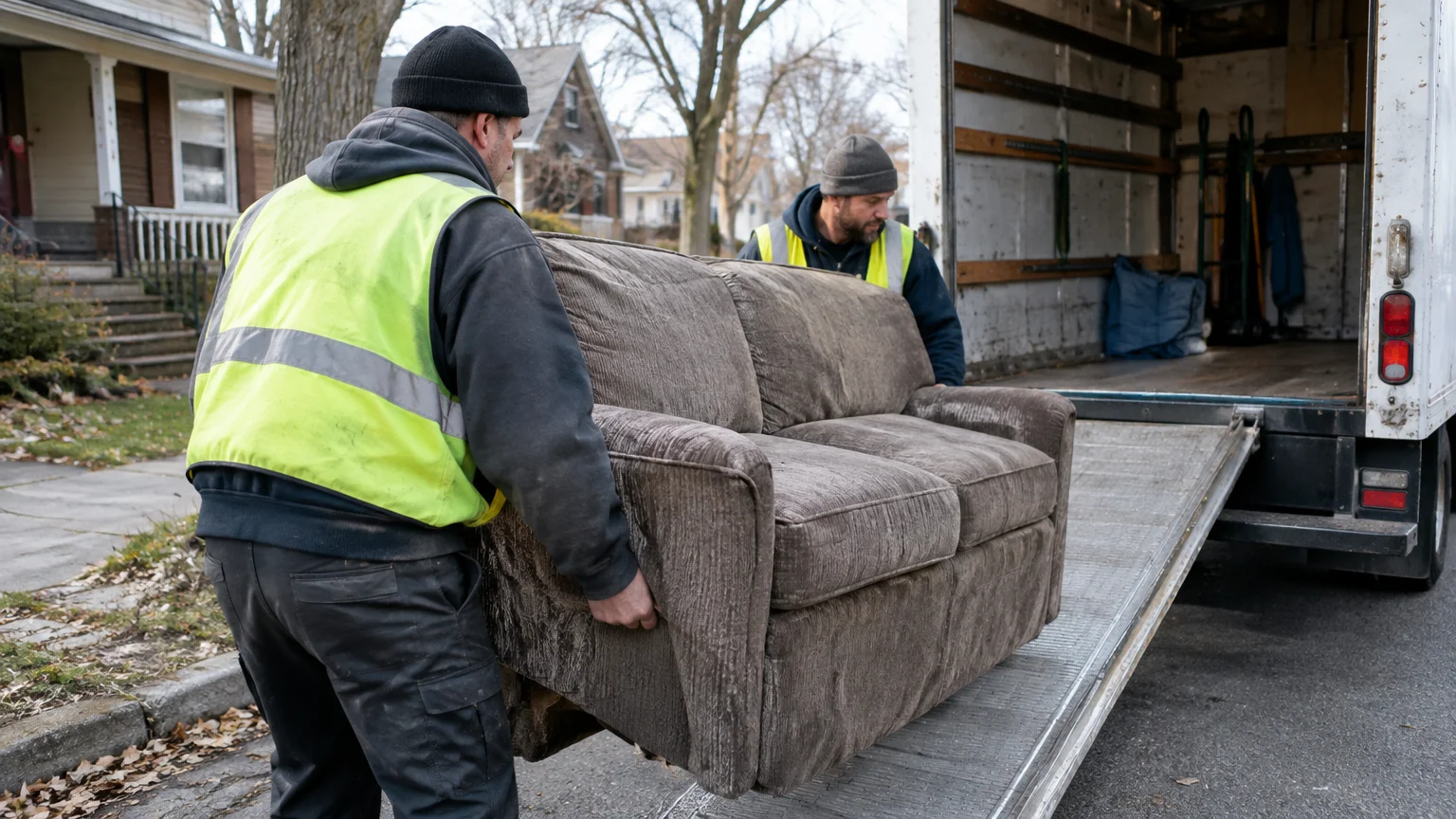
Professional couch removal usually starts with a review of the furniture and its path out. The crew protects the property, moves the couch, loads it, and takes it to an appropriate reuse, recycling, or disposal outlet.
How Pickup and Hauling Typically Work
The owner explains what needs to go and points out access concerns. The crew checks for hidden items, loose parts, and safe lifting points. If the plan changes, the owner should receive an updated quote before work continues.
The couch is moved along the planned route and loaded into a suitable vehicle. Usable items may go toward reuse when accepted. Damaged furniture may follow a disposal or material recovery process based on local options.
Remove personal items before the crew arrives. Keep children and pets away from the work area.
How Crews Protect Floors, Walls, and Doorways
Crews may use moving blankets, straps, dollies, corner guards, and careful lifting methods. They should watch doors, trim, railings, lights, and walls.
Property owners can help by clearing the route and pointing out fragile surfaces. Mention lifts, locked gates, narrow parking areas, and building rules before pickup.
A careful crew does not rush through a tight space. If the couch cannot fit safely, the crew should explain the next option instead of forcing it through a doorway.
How Should Businesses Handle Old Couches and Office Furniture?
Businesses should plan couch removal around customers, workers, tenants, and building rules. A clear plan limits disruption and keeps the work area safe.
Removing Sofas From Offices, Rentals, and Commercial Spaces

Office sofas may sit in reception areas, break rooms, waiting rooms, or shared lounges. Rental properties may have couches left by tenants or damaged during a move. Each place may have different access and timing needs.
Managers should check for personal items, keys, papers, and electronics before removal. They should ask building management about loading zones, lifts, insurance rules, and approved work hours.
Businesses may have several items. A couch removal plan can include chairs, tables, desks, mattresses, and other bulky furniture. Grouping work into one visit may simplify scheduling, but describe every item clearly.
Planning Removal Around Tenants, Customers, or Employees
Schedule work when fewer people use the area. Place signs near the work zone and keep walkways open. In a shared building, tell tenants and staff about noise, access, and timing.
A manager should meet the crew and confirm the items. That person can provide keys, unlock doors, and answer building questions. Photos sent before the visit may reduce delays.
Kennesaw Junk Removal serves homes and businesses in the main Kennesaw area, from Downtown Kennesaw and Legacy Park to Marietta, Austell, Hiram, Dallas, and nearby communities. In Kennesaw, clear scheduling can help a property owner remove an old couch while normal work continues.
What Is the Best Way to Get Rid of an Old Couch?
The best method depends on condition, access, timing, and local rules. Reuse is a strong choice for a clean couch. Recycling or bulk collection may work for some damaged items. Professional removal is often safest when the couch is heavy or hard to reach.
A Practical Couch Disposal Checklist
Use this checklist before choosing a disposal method:
- Inspect the fabric, frame, cushions, and hidden areas.
- Measure the couch and every part of the removal path.
- Remove personal items and clear doors, halls, and stairs.
- Ask a charity, buyer, or recycling facility about acceptance rules.
- Check local bulk-pickup rules before placing anything outside.
- Share photos and access details when arranging furniture removal.
Do not move a couch alone when it is heavy, unstable, or blocked by stairs. Do not put damaged furniture outside without knowing the collection rules. A careful plan lowers injury risk and prevents a rejected pickup.
When to Contact a Local Furniture Removal Service
A local service can help when donation is not available, recycling rules are unclear, or the couch cannot move safely. It may also help with couch and mattress removal, office furniture, and other bulky items during residential or commercial cleanouts.
Kennesaw Junk Removal can help property owners review the removal plan and choose a practical next step.
Frequently Asked Questions
Can an old couch go in a dumpster?
A couch may not fit safely in a small dumpster. Many waste providers also have special rules for upholstered furniture. Ask the provider before placing it inside. A bulk program, recycling site, donation group, or furniture removal crew may work better.
How do people get rid of a couch and mattress together?
Couch and mattress removal can often be planned as one furniture pickup. List both items before scheduling. Mattresses may have separate handling rules because of their size and materials. Tell the crew about stairs, lifts, tight doors, and other access issues.
Can a wet or stained couch be donated?
Most donation groups want clean furniture that another person can safely use. A wet, moldy, pest-damaged, or badly stained couch may be refused. Ask the organization first, then choose recycling or professional removal if the couch is not fit for reuse.
What happens to an old couch after removal?
The next step depends on its condition and local facilities. A usable couch may go to reuse. Parts may be separated for material recovery, while badly damaged furniture may go to an approved disposal site. Ask the service how items are handled.
Do homeowners need professional help to remove a couch?
No. A light couch may be moved safely by capable adults when the route is clear and level. Professional help makes more sense for heavy sleepers, sectionals, stairs, tight turns, injuries, or limited assistance. Nobody should risk a back injury or property damage.
Key Takeaways
- Inspect the couch before choosing donation, resale, recycling, bulk pickup, or hauling.
- Measure doors, halls, stairs, lifts, and turns before planning movement.
- Confirm local rules before leaving upholstered furniture at the curb.
- Never lift a heavy or unstable couch alone.
- Share access details so the final quote and removal plan are accurate.
Conclusion
Learning how to get rid of an old couch starts with an honest condition check and a safe removal plan. A clean couch may be reused, while a damaged or oversized one may need recycling, bulk collection, or professional hauling. Careful measurements and local rule checks prevent many problems.
For homeowners, landlords, offices, and property managers, the right choice saves time and lowers the risk of damage. Kennesaw Junk Removal helps Kennesaw residents handle bulky furniture with a clear and practical process.
If you are unsure what to do, Contact us to arrange old couch removal with a clear plan for access and handling.
If you are not sure what you are dealing with, it is worth having someone look at it before it turns into a bigger job. Get in touch with Kennesaw Junk Removal today and we will tell you where you stand.