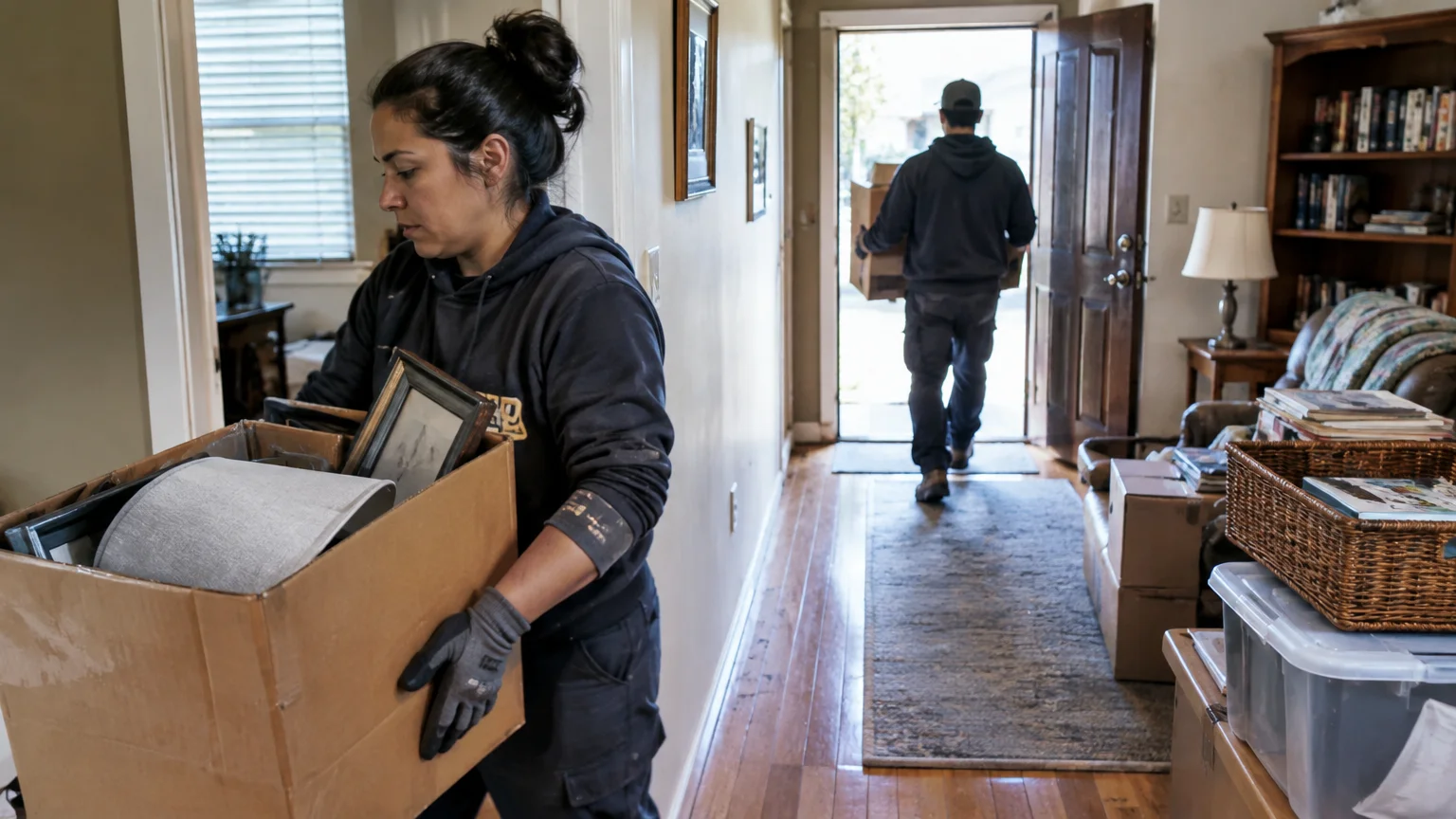
A whole house cleanout removes unwanted belongings from several rooms or an entire home. Plan the work, sort items into clear groups, and set aside anything that needs special handling. Homeowners in Kennesaw can use this guide to decide what to keep, donate, recycle, or remove, and when to arrange help.
Table of Contents
- What does a whole house cleanout involve?
- How should you plan a whole house cleanout?
- How do you sort belongings during a house cleanout?
- Which rooms should you clear first?
- How do you prepare furniture and household items for removal?
- What items require special handling or disposal?
- How should you plan removal for a large cleanout?
- Should you handle a house cleanout yourself or hire a service?
- How can you manage an estate cleanout or move-out?
- What are the key takeaways for a successful whole house cleanout?
- Frequently Asked Questions
What does a whole house cleanout involve?
A whole house cleanout is a planned way to sort and remove unwanted things throughout a home. It can include furniture, boxes, appliances, household goods, and debris. The work may cover a few rooms, storage spaces, or the full property, based on what needs to go.
How does a full cleanout differ from a room declutter?
A room declutter focuses on one small area and often leaves most things in the home. A full cleanout looks at many rooms and storage areas. It may include bedrooms, living spaces, a garage, an attic, a basement, or outdoor storage. A clear plan helps stop belongings from being moved from room to room again and again.
The goal is not to throw everything away. Homeowners can keep useful things, set aside items for family, and find goods that may be donated or recycled. The work is done when unwanted belongings are gone and the home is left as the owner needs it. A house cleanout plan can help make each choice clear.
When might a homeowner need a full-property cleanout?
A cleanout can help before a move, after a home sale, or when stored belongings have built up over time. It may also be needed after a tenant leaves, during an estate process, or before home repairs. A house cleanout service can help with removal after the owner has decided what should stay.
For a foreclosed home, the owner or property manager should first check who may enter and what must stay. Local rules and property agreements can affect what may be removed. Kennesaw Junk Removal can explain the removal process for Kennesaw homeowners, while the person in charge makes decisions about the property. Take time to confirm permission before work starts.
How should you plan a whole house cleanout?
Start by deciding what the cleanout needs to do and which areas matter most. Then set a useful schedule, gather supplies, and note items that need careful handling. A simple plan can prevent rushed choices and help family members or other people involved stay in agreement.
How can you set priorities and scope?
Walk through the home and write down each space that needs work. Decide whether you need to clear one floor, prepare the whole home for sale, or remove only certain belongings. Mark rooms that must be ready first. This may be a hallway needed for safe access or a bedroom that needs repairs.
Set aside time to sort before you arrange removal. Leave time for decisions, donation drop-offs, and local collection rules. A rushed plan may lead to useful things being thrown away or important papers being missed. If several people are helping, agree on who can approve removal before work begins.
Which items need special attention?
Look for things that may need a separate plan. These can include paint, cleaners, fuel, batteries, medical supplies, electronics, or large appliances. Do not mix unknown liquids or chemicals with regular household waste. Keep children and pets away from items that could leak, break, or cause harm.
Make a short list of questions for the local waste or recycling provider. Rules can differ by community, and some goods need a special drop-off place. Put important papers, keys, medicine, and valuables in a separate, clearly marked spot. This small step can keep them from being packed with items for removal.
How do you sort belongings during a house cleanout?
Sort belongings into clear groups before removal starts: keep, donate, recycle, and remove. These groups help people make choices and keep wanted items apart from junk. Use labels or separate areas so everyone helping with the cleanout knows where each item belongs.
How should items be separated?
Choose one spot for each group. Keep items that will stay in the home together, and put donations in a clean, dry place. Set recyclable goods aside only if a local program accepts them. Put unwanted items in a separate spot that is easy to reach for pickup.
Before offering an item for donation, check that it is clean, safe, and in usable shape. Broken or stained goods may not be accepted. Review papers before recycling or throwing them away, especially if they have personal or money details. If you are unsure, pause and check instead of making a quick choice.
- Keep: Things the owner plans to use, store, or pass to family.
- Donate: Clean goods that are useful and accepted by a local group.
- Recycle: Materials that a local recycling program accepts.
- Remove: Unwanted goods that are not right to keep, donate, or recycle.
How can families decide what to do with sentimental belongings?
Set photos, letters, family keepsakes, and other personal things aside for a separate review. Family members can take turns looking through them, or one person can gather them for later. There is no need to decide every hard matter during the first sorting session.
For inherited belongings, agree on how choices will be made before removal starts. A shared list or labeled box can help prevent confusion. Keep valuable or important things safe until the right person has looked at them. If it is not clear who owns an item, wait until the person with permission can decide what happens next.
Which rooms should you clear first?
Start with the room or path that affects safety, access, or the cleanout date. Clearing an entryway can make it easier to move things without carrying them around obstacles. Then work through rooms in a planned order instead of jumping between spaces.
How do you choose a starting point?
Think about what the home needs first. If movers or repair workers are coming, clear the areas they need to reach. If you are getting the property ready for people to view, focus on the spaces that need to be ready. For a large cleanout, a room-by-room list makes progress easier to follow.
Do not block stairs, exits, or walkways with things waiting for removal. Keep a clear path from each room to the door. If a path gets crowded, stop moving items until it is safe again. Good access helps protect people and lowers the chance of damage to walls, floors, or belongings.
What order works for bedrooms, living areas, and storage spaces?
When access is clear, pick an order that fits the home. Some people start with main living spaces, while others begin with rooms that hold many unwanted things. Finish one small area before opening boxes in another room. This makes it easier to see what is done and what still needs a choice.
Bedrooms may hold clothes, bedding, and personal papers. Living areas often have furniture and electronics. Attics, basements, and garages can hold mixed goods that need more sorting. Check storage spaces for things that belong to someone else or need special care. An estate cleanout service can help with removal after the owner or family has sorted what should stay.
How do you prepare furniture and household items for removal?
Make items easy to see and reach, but leave heavy or awkward lifting to people with the right tools. Clear paths, group items that are going, and point out anything that must stay. Before moving furniture, check doors, stairs, and tight turns to make sure it can pass safely.
How should furniture be readied for pickup?
Remove loose things from drawers, shelves, and cushions. Keep small parts, such as shelves or hardware, with an item if they are needed. Do not assume broken furniture has to be taken apart. A removal team can advise whether it should stay whole based on its size and the path out of the home.
Before getting rid of old furniture, see if it is suitable for donation. A chair with a strong frame may still be useful, while furniture with sharp breaks or major damage may not be accepted. Do not leave large items at the curb unless local rules and the pickup plan allow it.
What should be done before the pickup?
Keep items for removal apart from belongings that will stay. Keep pets away from the work area, and tell the crew about narrow spaces, stairs, or surfaces that can be damaged. If an item is too large to move safely, do not lift it alone. A back injury or dropped item can make a simple cleanout much harder.
For appliances, remove food and loose contents. Keep an appliance upright when its instructions say to do so. Do not cut cords or hoses unless the owner knows how to do that safely. If a unit is connected to a gas line or water supply, use a qualified person when needed. Clear directions help the removal team work safely.
What items require special handling or disposal?
Some household goods cannot go in regular trash or standard recycling. Paint, fuel, chemicals, batteries, and some electronics may need special collection. Local waste agencies can explain what they accept and where to take it. Check first before putting a questionable item in a removal pile.
How should hazardous or restricted items be handled?
Keep unknown chemicals in their original containers when you can. Do not pour them down a drain or mix them together. Do not handle leaking or damaged containers. Keep them away from heat, children, and pets, then ask the local waste agency what to do. If an item is an immediate danger, leave the area and seek local help.
Rules can differ across towns and counties. A junk removal company may not take every restricted item, so ask before planning the pickup. Make a separate list of things that need a special drop-off. This can prevent delays and keep unsuitable goods out of the regular load.
How can appliances, electronics, and bulky goods be managed?
Appliances and electronics may have parts or materials that need careful recycling. Ask a local recycling program, store, or waste agency what it accepts and how to prepare items. For a refrigerator, remove food and ask the receiving service about its rules. Do not leave an appliance where a child could climb inside or become trapped.
A broken sofa, mattress, or other large item may need its own collection plan. If an item is heavy, unstable, or hard to carry, do not move it without help. Kennesaw Junk Removal can help residents sort out which household goods are suitable for removal and which may need another disposal option.
How should you plan removal for a large cleanout?
Plan removal based on the amount and kind of material, the path out of the home, and how many areas need work. A few loose items need a different plan from a property with furniture, appliances, boxes, and garage debris. Share a clear list so a service can understand the work before removal day.
What affects the scope of the work?
The amount to remove is one part of the plan. Access matters too. Stairs, narrow halls, long walks to the vehicle, and limited parking can change how items are moved. Large, heavy, or fragile goods may need extra care. A full-property cleanout often needs more planning than a small pickup because there are more rooms and choices.
Describe what is in each area and note anything that cannot be taken. Photos can help show the layout, but they do not replace a clear list. Ask how the team handles items that need special disposal, and check whether the work includes carrying things from inside. Make sure the job plan is clear before work begins.
How is a full cleanout different from smaller removal jobs?
A smaller job may involve one couch, a mattress, or a few boxes. A whole house cleanout can include many kinds of belongings spread across the property. It may also involve donation sorting, appliance removal, and planning for access. The right way to handle it depends on what needs to go and what the homeowner has already sorted.
Some homeowners handle small items themselves and arrange help only for large goods. Others choose a house cleanout service to remove several groups of things at once. Neither plan fits every home. Choose an approach that suits the work, the time available, and the people who can help safely.
Should you handle a house cleanout yourself or hire a service?
Homeowners can safely sort belongings, label boxes, and do light cleaning on their own. A professional service may help when the job has heavy lifting, many large items, limited time, or hard access. The choice depends on the work and what the homeowner can manage safely.
Which tasks can homeowners do themselves?
Most people do not need a professional to make a sorting plan, gather small household items, or wipe empty shelves. They can label boxes, set donations aside, and check local recycling rules. Sweeping a cleared floor is also a sensible do-it-yourself task when the space is safe to enter.
Do not lift anything that feels too heavy or awkward. Avoid moving goods through blocked paths, carrying large furniture down stairs alone, or handling unknown chemicals. If a task needs special tools, training, or work on utility lines, ask a qualified person. Stopping to stay safe is better than risking injury or damage.
When should a removal company be considered?
A local removal service can help when there are many items, large furniture, or a firm move-out date. It may also help when the owner cannot move goods or when several rooms need clearing. Before choosing a company, ask what it accepts, how it handles access, and what the crew needs ready when it arrives.
People may search for house cleanout help or estate cleanouts near me. Compare providers by checking their service area, accepted items, and work process. Make sure the plan covers the needs of the property. Kennesaw Junk Removal serves people seeking residential junk removal, including Downtown Kennesaw and nearby communities such as Marietta, Austell, Hiram, and Dallas. The team can explain the next steps for a planned pickup.
How can you manage an estate cleanout or move-out?
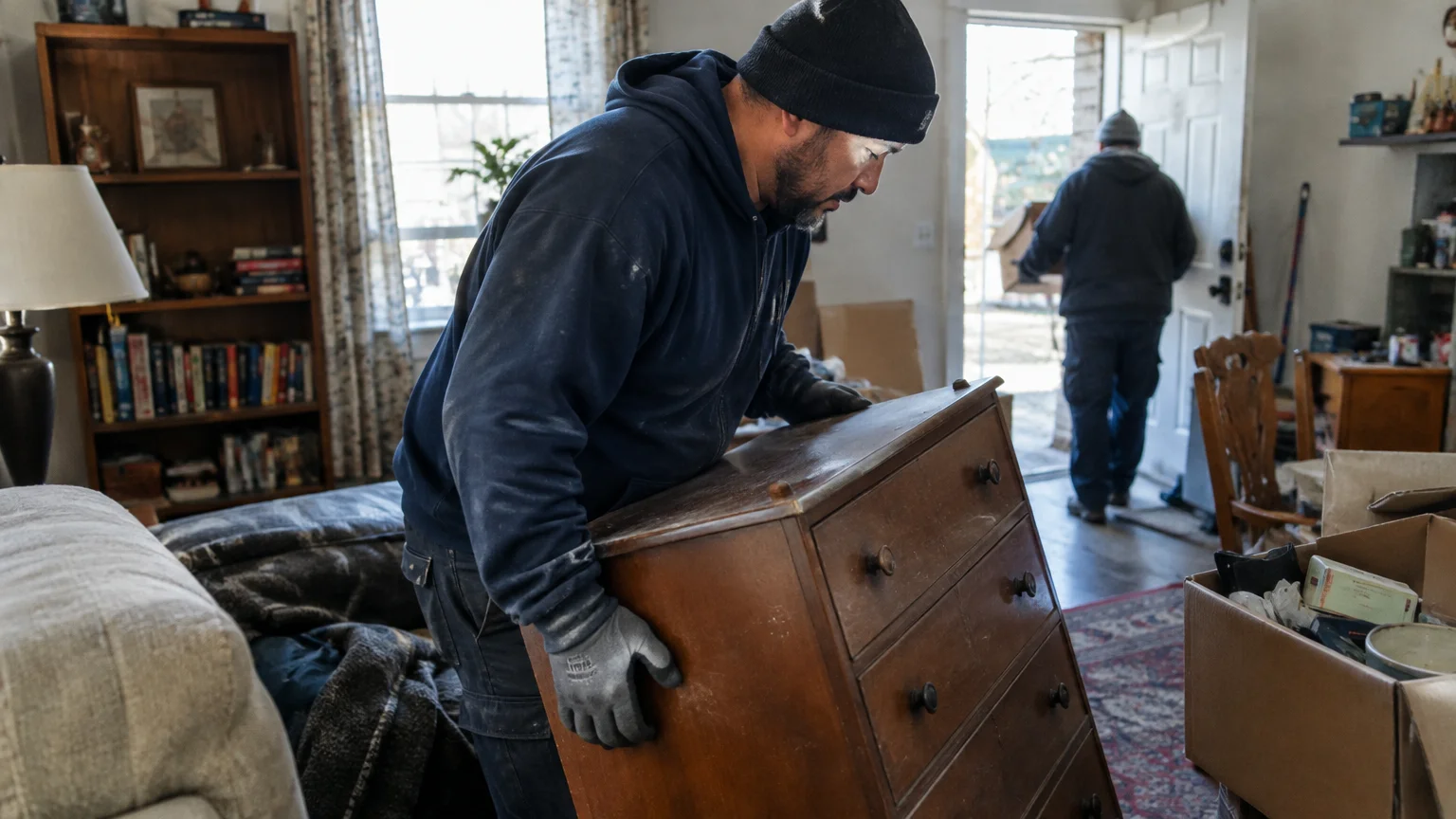
An estate cleanout or move-out is easier when one person coordinates choices, access, and timing. Make sure the people with authority agree on what can leave. Then set aside important records and belongings before arranging removal, donation, or recycling.
How can family members or property stakeholders coordinate?
Choose one main contact to keep the plan clear. Share a list of rooms and items, and give family members a simple way to mark anything they want to keep. Set a date for decisions, but allow time to review personal belongings. This can help prevent disagreements on removal day.
For a rental or foreclosed property, check who has permission to enter and make choices. Read the lease, sale papers, or property instructions before removing anything. Keep a record of things that must stay, and do not throw away papers or equipment that belongs to someone else. Clear approval can protect everyone involved.
How should deadlines, documents, and access be handled?
Write down key dates for moving out, repairs, property access, and pickup. Keep keys, entry details, and the main contact’s details together. Remove personal papers, medicine, valuables, and things the owner needs to take along before the cleanout begins.
If the property has limited access or building rules, share those details early. Ask whether you need to arrange a loading area, elevator, or parking space. A clear plan can help the crew reach the items without disturbing neighbors or blocking shared areas. After removal, walk through the home and check that nothing marked to stay was taken.
What are the key takeaways for a successful whole house cleanout?
A successful cleanout starts with a clear goal and a safe plan. Sort belongings before removal, keep important things apart, and check local rules for items that need special care. If the job is too large or heavy to manage safely, choose a removal plan that fits the property and its timing.
What checklist keeps the project moving?
- Decide which rooms and storage areas need to be cleared.
- Set aside papers, valuables, medicine, and belongings that must stay.
- Sort items into keep, donate, recycle, and remove groups.
- Check local rules for appliances, electronics, chemicals, and restricted goods.
- Clear safe paths and share access details before pickup.
- Walk through the property after removal to check the result.
Use the checklist as a guide, not a reason to rush. A house cleanout may take more than one sorting session, especially when several people share decisions. Keep donation items clean and separate, and check that the receiving group accepts them before drop-off. Plan removal after clearly marking everything that needs to stay.
Conclusion
A whole house cleanout does not need to happen all at once. A room-by-room plan, clear sorting groups, and safe handling can make the work easier. Homeowners can do light sorting and cleaning themselves, then arrange help for large or difficult items. Contact us to discuss your cleanout with Kennesaw Junk Removal and plan the next step.
Key takeaways
- Plan the rooms, timing, and goal before moving belongings.
- Sort items clearly and protect important or sentimental things.
- Check local guidance before handling restricted goods or appliances.
- Do simple sorting and light cleaning yourself; get help with unsafe lifting.
- Confirm access, accepted items, and the removal plan ahead of time.
Frequently Asked Questions
How do you get rid of old or broken furniture?
First, check whether the furniture is clean and useful enough to donate. If it is damaged or no group will accept it, arrange a suitable large-item pickup or removal service. Clear a safe path before moving it, and do not try to carry a heavy or awkward piece alone.
How do you clean out a foreclosed home?
Start by confirming who has legal permission to enter and decide what can be removed. Check the property instructions and keep anything that must stay. Sort belongings, protect records and valuables, and plan separate handling for restricted items. A removal service can help after the property manager or owner approves the items for removal.
How can you get rid of a refrigerator or other appliance?
Remove food and loose items, then ask the local waste agency, recycling program, or removal provider about its rules. Some appliances need special handling or a set collection route. Do not disconnect gas or water lines unless a qualified person can do so safely. Keep children away from an appliance waiting for pickup.
How do companies handle large-scale cleanouts?
A removal company needs to know which rooms are involved, what should go, and how the crew will reach it. The homeowner should point out anything that must stay and flag heavy, fragile, or restricted goods. The company can then confirm which items it accepts and explain how the removal work will be planned.
What should be done with household items that cannot be donated?
Check whether an item can be recycled or needs a special drop-off. Local rules can differ, especially for appliances, electronics, chemicals, and batteries. Keep restricted items apart from regular junk and ask the local waste agency or removal provider about accepted options. Do not leave items at a donation site without approval. If you are unsure what an item is, pause and ask before moving it.
If you are not sure what you are dealing with, it is worth having someone look at it before it turns into a bigger job. Get in touch with Kennesaw Junk Removal today and we will tell you where you stand.