A professional concrete disposal service helps when broken slabs, bricks, asphalt, or masonry are too heavy, large, or risky to move alone. In Kennesaw, these warning signs often include blocked work areas, limited hauling space, strict disposal rules, and possible damage to lawns, driveways, walls, or finished surfaces during removal.
Table of Contents
- How can you tell when concrete debris requires professional removal?
- Is the concrete too heavy or bulky to handle safely?
- Does the debris exceed your truck, trailer, or disposal capacity?
- Are broken slabs, bricks, or asphalt blocking your job site?
- Do local disposal rules make concrete removal complicated?
- Could concrete removal damage your property or landscaping?
- How does hiring a professional concrete disposal service simplify cleanup?
- Frequently Asked Questions
- Conclusion
How can you tell when concrete debris requires professional removal?
Seven signs show that concrete debris may need professional help. The pile may be too heavy, too large, in the way, hard to sort, or risky for nearby property. Cleanup may also delay other work or create problems with local disposal rules.
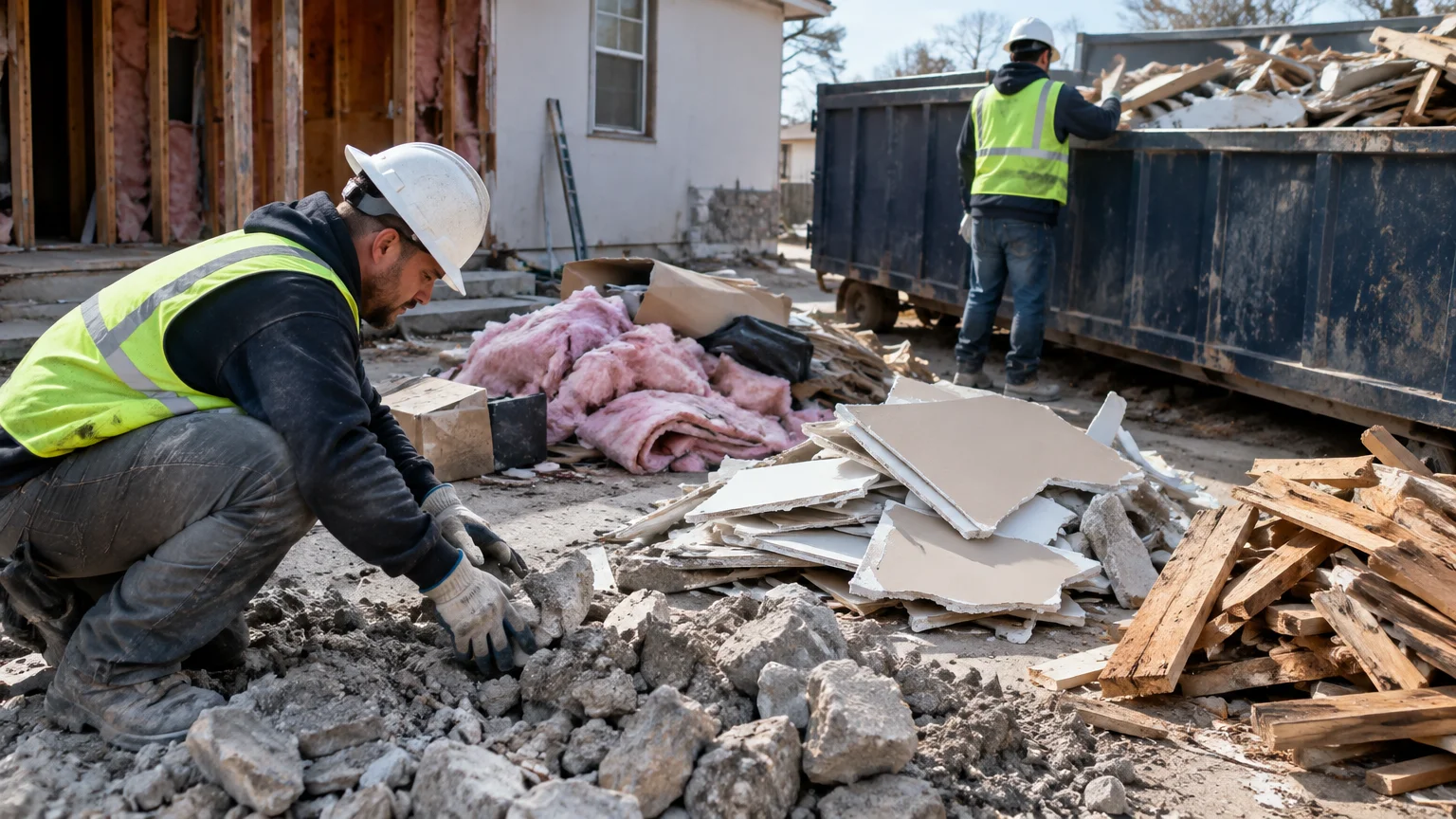
Concrete debris includes broken slabs, chunks, bricks, pavers, asphalt, and masonry. Unlike normal household junk, these items are dense and hard to move. A small pile can still put great strain on a person, hand truck, trailer, or pickup bed.
A contractor may need a clear site before the next worker arrives. A homeowner may need an old patio, walkway, or driveway removed before new work starts. In either case, a professional concrete disposal service can help plan safe removal and keep the job moving.
Recognizing the seven warning signs
A pile needs closer attention when it sits near a narrow gate, soft ground, or sharp slope. The same is true when workers must carry pieces over finished floors, planted areas, or steps. These conditions make basic cleanup harder and less safe.
The warning signs may happen at the same time. A large pile can block a driveway and exceed a trailer’s safe load. Mixed debris can add sorting work and create more disposal steps. When several problems appear, professional help is often the safer choice.
Why broken concrete is different from ordinary household junk
Concrete does not flatten like cardboard, fabric, or loose household items. It can shift during lifting and damage surfaces when dragged. It also creates dust and sharp edges when pieces break apart.
Kennesaw Junk Removal can help homeowners, contractors, and property owners review the removal plan. A quick look at the pile, access path, and nearby surfaces can show the main risks before loading starts.
Is the concrete too heavy or bulky to handle safely?
Concrete may be too heavy to move safely when one person cannot lift each piece with control. Awkward shapes, broken edges, and uneven ground add more risk. If workers must twist, carry far, or stack pieces above their shoulders, professional help is a sensible choice.
A safe lift needs firm footing and a clear path. Broken slabs may have rough edges that cut gloves or clothing. Pieces can also roll, tip, or slide when placed on a dolly. These risks grow near steps, walls, vehicles, and active work areas.
Homeowners can often handle light sweeping and small loose pieces when the path is clear. They should wear sturdy shoes, gloves, and eye protection. They should not lift large sections, use power tools to break concrete, or move heavy loads without proper help.
How weight and awkward shapes create injury risks
Large pieces are not always easy to judge by sight. A thin slab may still be hard to control because it is wide and difficult to grip. A broken corner can shift without warning while two people carry it.
Dust is another concern. Dry sweeping can send fine particles into the air. Light cleanup may be safe with care, but heavy breaking and loading should be left to trained workers with proper safety gear.
When tools and additional labor are needed
Some jobs need carts, ramps, lifting tools, or more than one person. Other jobs need careful breaking before loading. The best method depends on the material, pile size, access route, and nearby property features.
A professional crew can plan how the debris will move before handling it. The plan may include protecting a doorway, keeping people away from the loading area, and placing pieces so they stay stable. This helps prevent rushed choices and property damage.
Does the debris exceed your truck, trailer, or disposal capacity?
A load may exceed a vehicle’s safe capacity when concrete fills the bed quickly or rises above the sides. Volume alone does not show the whole problem. Dense material can make a vehicle unsafe before it looks full.
Many homeowners also lack a safe way to secure broken masonry. Loose pieces may shift during travel and damage the vehicle. A trailer may need strong tie-down points, a proper gate, and a safe loading plan.
Project managers should also consider time lost during extra loading and unloading. A small vehicle may need several trips. Each trip can interrupt demolition, delay other workers, and leave the site partly blocked.
Estimating the volume of broken concrete and masonry
View the pile from several sides before planning removal. A flat stack, scattered chunks, and mixed bricks may each need a different loading method. Empty space between pieces also affects how well the load can be arranged.
A quick visual check can miss pieces under soil, brush, or other debris. It can also miss heavy material behind a building or inside a garage. A professional review helps include the full cleanup area.
Why multiple trips can delay a construction project
Extra trips take time away from the main job. They may leave tools, workers, or customers waiting for a clear path. Bad weather can make the delay worse when debris sits outside between trips.
A planned removal helps the contractor choose the right time. The crew can clear the area before deliveries, inspections, landscaping, or final cleaning. For Kennesaw projects, Kennesaw Junk Removal offers a local point of contact for construction debris removal planning.
Are broken slabs, bricks, or asphalt blocking your job site?
Blocked debris is a clear sign that removal should happen soon. Broken concrete can limit access to doors, driveways, tools, storage areas, and work zones. It can also create trip hazards for workers, residents, visitors, and delivery drivers.
A clear path supports safer movement around the site. It gives workers room to carry supplies and helps vehicles reach the loading area. Removing debris at the right time can also stop new materials from being placed on old waste.
This matters during kitchen, bathroom, patio, driveway, and wall projects. It also matters during property cleanouts when construction waste is mixed with furniture, appliances, or household items. A job site cleanup plan should address each material instead of treating all junk the same way.
How debris affects access, productivity, and site safety
Loose chunks can hide nails, metal, glass, and other sharp items. They can collect water and mud, which makes walking surfaces less stable. When debris spreads, workers spend more time stepping around it and less time on planned work.
A clear site is easier to inspect and organize. It helps the project lead see what remains and what needs protection. It also makes it easier to keep children, pets, and visitors away from active work.
Clearing walkways, driveways, and staging areas
Choose the safest route before moving pieces. Check slopes, gates, steps, soft ground, and finished surfaces. Keep the route clear of cords, tools, and stored materials.
Small cleanup tasks may be safe for a homeowner. Large piles near a narrow route are different. In those cases, professional construction debris removal can clear the space while reducing strain on the property and project team.
Do local disposal rules make concrete removal complicated?
Concrete disposal can become hard when local facilities have rules for loads, accepted materials, sorting, or drop-off times. Requirements vary by facility and material type. A load containing concrete, soil, wood, paint, or household waste may need separate handling.
Concrete may go to a construction waste facility, transfer site, or recycling operation. The right place depends on local rules and the material’s condition. Before hauling, the person in charge should confirm what the chosen facility accepts.
A professional crew can help decide whether the load needs sorting before transport. This helps when a remodel creates drywall, wood, insulation, packaging, and masonry in one area. Proper separation can reduce confusion at the disposal site.
Understanding landfill, recycling, and transfer-site requirements
A transfer site is a place where waste is received, sorted, and sent to another location. Some sites accept clean concrete apart from mixed construction waste. Others limit certain loads or require special unloading steps.
Recycling may be possible when concrete is clean and free from other materials. Recycled aggregate is crushed material that can be used in some building work. The facility decides if a load qualifies, so current site rules should be checked first.
Why separating concrete from other construction debris matters
Mixed loads are harder to inspect and process. Wood, drywall, plastic, soil, and metal can change where the material must go. Separating items at the job site makes loading easier and may prevent a rejected load.
Contractors should create separate areas for concrete, wood, metal, and general waste when possible. Homeowners can place small items in marked containers and keep heavy masonry apart. Kennesaw Junk Removal can help Kennesaw customers plan a cleaner removal process for mixed renovation debris.
Could concrete removal damage your property or landscaping?
Concrete removal can harm property when heavy pieces are dragged across finished surfaces or carried through narrow spaces. Lawns may develop ruts, pavers may crack, and walls or door frames may get scraped. Careful route planning helps lower these risks.
The removal path should fit the size and shape of the debris. A route that works for small bricks may not work for a broken slab. The crew should also check gates, steps, slopes, garden beds, irrigation lines, and parked vehicles.
Homeowners can protect light items by clearing the path and moving loose decorations. They should not move heavy slabs near glass, retaining walls, or steep edges. These areas need a controlled plan and proper equipment.
Protecting driveways, lawns, walls, and finished surfaces
Protection may include boards, mats, or other covers along key parts of the route. The right choice depends on the surface and equipment. Covers should not create a new trip hazard or block safe access.
Workers should avoid dropping pieces into piles. Controlled placement helps limit cracks, dust, and flying chips. It also keeps the pile stable until loading is done.
Planning a safe path from the debris pile to the truck
Check the route from the pile to the vehicle before loading begins. Look for tight turns, overhead obstacles, soft soil, and places where people may enter. Place the vehicle where loading will not block emergency access.
A clear plan helps the crew work in a steady order. It also lets the property owner point out fragile areas. This is useful during driveway removal, patio demolition, and outside remodeling.
How does hiring a professional concrete disposal service simplify cleanup?
Hiring a professional concrete disposal service combines site review, safe loading, hauling, and disposal planning. The crew looks at the material, access route, nearby surfaces, and mixed debris. It then chooses a practical way to remove the load.
The process often starts with details about the debris. The crew may ask if the material includes concrete, bricks, asphalt, soil, wood, drywall, or household items. Clear details help match the removal plan to the site.
During loading, the crew keeps the work area orderly and watches for unstable pieces. It may separate materials when needed. After removal, the site can be checked for loose fragments and other hazards.
What to expect during assessment, loading, hauling, and disposal
An assessment identifies the pile size and the best path out. Loading then focuses on stable handling and careful placement. Hauling needs a suitable vehicle and secure transport.
The final step is delivery to an appropriate facility or destination. Facility rules may change how clean concrete, mixed debris, and other construction waste are handled. Customers should ask which materials are included and what must stay separate.
This process can also support renovation debris hauling, contractor junk removal, and property cleanup. It may help with related needs such as furniture removal disposal, appliance removal and disposal, or hot tub removal and disposal when these items are part of one project.
Key takeaways for contractors, property owners, and homeowners
- Heavy, sharp, or awkward concrete is not normal household junk.
- A blocked job site can slow work and create safety risks.
- Vehicle limits and disposal rules matter before loading begins.
- A clear route helps protect lawns, driveways, walls, and finished surfaces.
- Clean separation makes construction waste removal easier to manage.
Frequently Asked Questions
What is the safest way to dispose of broken concrete?
The safest method is to separate concrete from other debris, plan a clear route, and use suitable tools and transport. Small loose pieces may be swept and handled by a homeowner. Large slabs, deep piles, or tight access areas are better suited to a professional concrete disposal service.
Can concrete go in a regular household trash bin?
Concrete should not go in a regular household trash bin. It can damage the container and may exceed collection limits. The right option depends on local facilities and the material’s condition. A disposal provider or local transfer site can explain accepted loads before transport.
What happens to old appliances during a cleanout?
Old appliances are usually separated from general junk before hauling. Some may need special handling because they contain refrigerants, batteries, wiring, or other regulated parts. A cleanout is a planned removal of unwanted items from a property. It may include appliances, furniture, and construction debris.
How can someone get rid of a hot tub after a remodel?
A hot tub often needs draining, disconnecting, breaking down, and careful removal through the available route. The method depends on its size, condition, wiring, and location. Homeowners should leave electrical disconnection to a qualified worker and use trained help for heavy sections.
Can one service remove garage, attic, and basement items in one trip?
One service may remove items from several areas during one planned visit. The provider needs details about stairs, narrow doors, heavy objects, appliances, and construction waste. Combining areas can make cleanouts more organized, but the plan depends on access and load capacity.
Conclusion
Concrete removal becomes a professional job when weight, volume, access, disposal rules, or property risks make the work unsafe or slow. Homeowners can handle light sweeping and small loose pieces when conditions are simple. Large, mixed, or awkward loads need a careful plan from the pile to the disposal site.
Kennesaw Junk Removal helps property owners and contractors manage construction debris removal and related cleanouts. Contact us to arrange a concrete cleanup plan that fits the material, access route, and project needs.