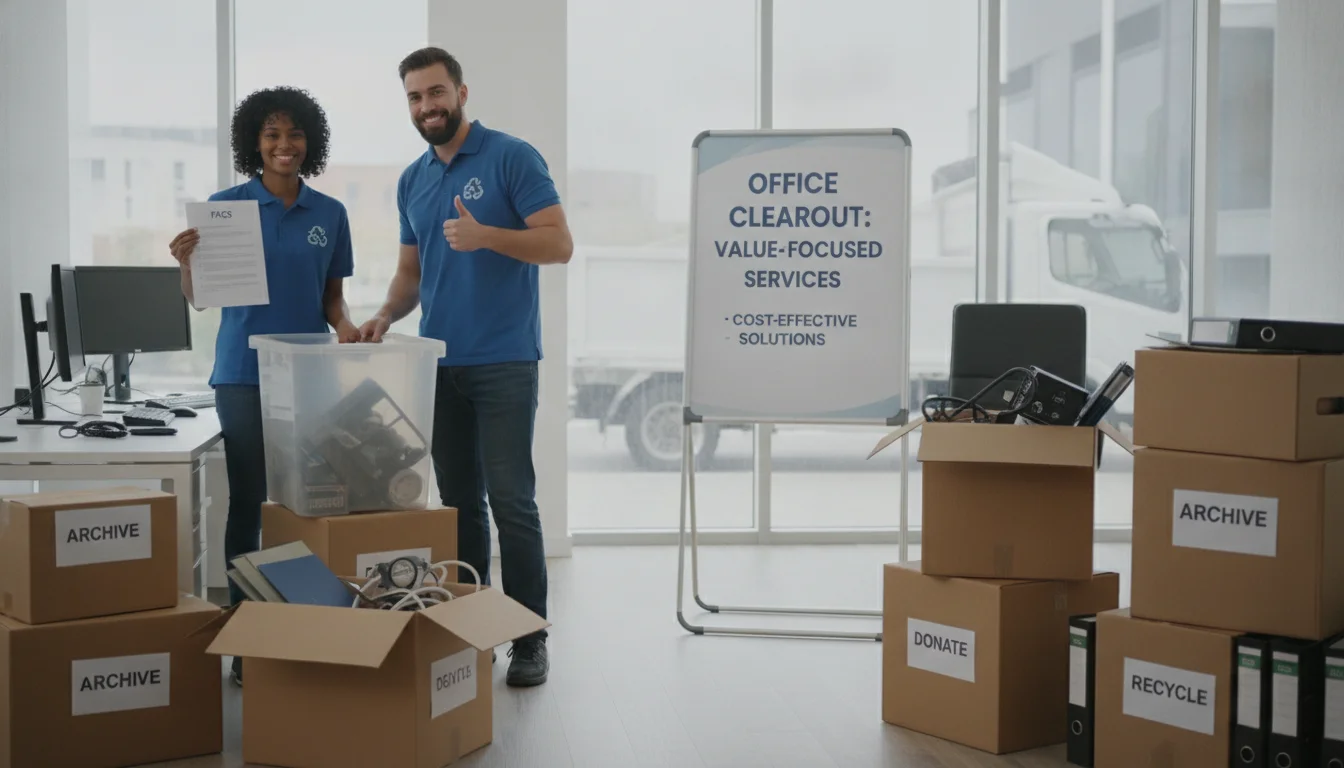
Stacks of desks, cables in knots, and a lease end date that will not move—this quick guide turns common questions into steps any team can follow. An office cleanout is the removal of furniture, fixtures, electronics, and debris with proper disposal and documented data protection, all aimed at a safe, on-time handoff with minimal landfill impact. If you’re planning a move or decommission in Kennesaw, you’ll find clear answers here to plan with confidence.
Key Takeaways
- Costs vary by scope and access; clear details make scheduling and scope more predictable
- Book early, especially around month-end and downtown Kennesaw dock hours
- Handle e-waste with R2/e-Stewards partners and NIST 800-88 data destruction
- Prep ahead: label items, reserve the freight elevator, and confirm on-site contacts
What is an office cleanout?
An office cleanout means trained crews remove office furniture, fixtures, electronics, and debris, then manage recycling, donation, and disposal correctly. The aim is to clear the space safely, protect data-bearing devices, and keep materials out of the landfill wherever possible. In Kennesaw, that often includes careful e-waste handling and access planning for busy buildings and tighter dock windows. If you searched for office cleanout FAQs, you’re in the right place.
Kennesaw Junk Removal helps businesses plan moves and decommissions with less stress. Local teams understand dock rules, elevator reservations, and permit steps common in Kennesaw, which helps reduce delays and supports a smooth handoff. For service details, see our Office Cleanout page.
1. How much does an office cleanout cost?
Costs vary by project because no two floors, buildings, or access points are identical. What you pay depends on the work required and how straightforward it is to load and haul. Specific details lead to fair, predictable planning and scheduling.
What drives pricing
- Volume: How much furniture, e-waste, and debris must be removed
- Labor: Crew size, stairs or no dock, and time on site
- Access: Elevators, loading zones, security check-ins, and long carries
- Special handling: Cubicles, servers, safes, or items requiring permits
On-site estimates and virtual quotes
A short walk-through provides the most accurate plan. Virtual options work too—share photos or schedule a brief video call. Include doors, halls, elevators, docks, and any tight turns. The more detail you provide, the tighter the schedule and scope.
Ways to control costs without cutting corners
Sort items before crews arrive. Group e-waste, donation-ready items, and trash, and label what stays. Reserve the freight elevator and confirm parking or loading areas. Good prep speeds the job and reduces surprises.
2. Scheduling and timelines: from request to completion
Most business moves run on firm dates. The earlier you book, the more options you have. Many small suites can be completed in a single day, while larger floors or phased projects may take longer.
Typical lead times and when to book
Plan as soon as your move date is set. End-of-month slots fill quickly. Busy periods may require extra notice, especially in downtown Kennesaw where dock hours and elevator windows can be limited.
Same-day or after-hours options to reduce downtime
Many teams offer evening or weekend work to avoid interrupting staff. After-hours windows can be ideal for medical offices, retail, or call centers. Confirm security rules and building access windows in advance.
What to do before crews arrive
- Pack small items and personal effects
- Unplug devices and label what stays
- Clear paths to doors and elevators
- Reserve the freight elevator and loading area
- Provide IT and facilities contacts on-site
3. Electronics, cubicles, and specialty items
E-waste refers to discarded electronics—laptops, servers, printers—that require compliant recycling and data protection. Look for recyclers with R2 or e-Stewards certification, and ensure data destruction follows NIST 800-88 guidance.
E-waste recycling and data destruction basics
Hard drives can be wiped, shredded, or degaussed. Serialized logs and photos can document each step. Keep asset tags if you track inventory. Decide in advance what will be reused, recycled, or destroyed.
Cubicle breakdown, server racks, and heavy equipment
Crews can disassemble panels, frames, and glass tops. Server racks may need IT sign-off before power-down. Safes, plotters, and large conference tables might require specialized tools or a lift-gate truck. Share these details early so the team arrives prepared.
What can’t be removed and practical alternatives
- Hazardous waste: chemicals, solvents, and biohazards (use hazmat vendors)
- Pressurized tanks: propane or CO2 (contact a gas supplier)
- Construction debris with asbestos: requires licensed abatement
- Loose confidential files: bag, box, or shred before removal
If you’re also clearing a property, see related services such as House Cleanout and Estate Cleanout. For attic or storage areas, Attic & Basement Cleanout can help.
4. What happens after the cleanout?
A reliable partner will sort items for reuse, donation, recycling, and disposal. Many businesses request waste diversion statistics to support sustainability goals and lease close-out files. Ask for a summary showing where materials went.
Recycling, donation, and waste diversion reporting
You can receive a report listing weights or counts by stream. This supports ESG tracking and landlord documentation. Donation receipts may be available from participating nonprofits.
Certificates of disposal and chain of custody
A certificate of disposal confirms proper handling. Chain of custody tracks items from pick-up to final destination and may include asset lists, serial numbers, and signatures.
Post-project walkthroughs and preparing the space for turnover
A brief walkthrough helps catch stragglers, floor plugs, and wall mounts. Then sweep and mop high-traffic areas. Cap low-voltage cables, remove stickers, and return keys and badges to building staff.
Frequently Asked Questions
Below are our office cleanout FAQs with concise answers your team can act on.
How far in advance should a business book an office cleanout?
Most teams can schedule standard suites within a few business days. End-of-month or quarter dates fill faster. Book as soon as your move date is set. If you need urgent help, ask about same-day or after-hours crews in Kennesaw.
Can you handle data-bearing devices and provide proof?
Yes. Drives can be wiped or destroyed per NIST 800-88 guidance. You can request serial tracking, photos, and a certificate of disposal. Using R2 or e-Stewards recyclers helps ensure compliant e-waste handling for your audit files.
Do crews offer commercial junk removal near me after hours?
Many providers offer evening or weekend work to limit downtime. Confirm elevator access, dock hours, and security rules with your building first. If you are in Kennesaw, Kennesaw Junk Removal can plan a window that fits your team and your landlord.
Key takeaways
- Pricing depends on scope: volume, labor, access, and special handling
- Prep speeds the job: pack, label, reserve the dock, and confirm contacts
- Protect data: use R2/e-Stewards partners and NIST 800-88 methods
- Document the close-out: request diversion reports and certificates
Conclusion
Office cleanouts can be straightforward with a clear scope, solid prep, and the right partner. If you’re in Kennesaw, Kennesaw Junk Removal can help plan and complete your project on time and with care. Contact us at +1 770 637 0949 or [email protected], or visit our Office Cleanout page. Serving Kennesaw and surrounding areas in Georgia—contact us today to schedule your cleanout and keep your turnover on track.